

Energy-Efficient Window Treatments for Coastal Homes
The best energy-efficient window treatments for Virginia Beach coastal homes are typically those that add insulation at the window or help control solar heat gain. Cellular shades, plantation shutters, solar shades, Roman shades, and layered window treatments can all play a role, depending on the window and its exposure.
That matters in a coastal home because windows can affect comfort throughout the year. Large expanses of glass bring in beautiful natural light and views, but they can also allow strong sunlight into a room during warmer months and feel noticeably cooler when outdoor temperatures drop.
At Made in the Shade Virginia Beach, Julie Boswell helps homeowners look at more than the appearance of a window treatment. During an in-home consultation, she can consider the direction your windows face, their size, how much direct sun they receive, your privacy needs, and how you use the room before recommending options.

What Are the Most Energy-Efficient Window Treatments?
Cellular shades, also known as honeycomb shades, are one of the first products to consider when insulation is a major priority, while shutters, Roman shades, solar shades, and layered treatments can address different aspects of year-round comfort.
The best choice depends on the problem you’re trying to solve.
For example:
- Cellular shades can provide an insulating layer at the window.
- Solar shades can help manage solar heat gain and glare.
- Plantation shutters create another substantial layer between the room and glass.
- Roman shades combine fabric with varying levels of light control.
- Layered treatments can address several needs at once.
A Sandbridge home with expansive windows and strong sun exposure may need something entirely different from a traditional Great Neck home where winter drafts are more noticeable.
That’s why energy-efficient window shade planning should start with the individual windows rather than a single product.
How Do Cellular Shades Help Insulate Windows?
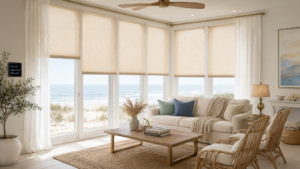
Cellular shades use a honeycomb-style construction that creates air pockets within the shade.
Those pockets provide an additional insulating layer between the room and the window.
That makes cellular shades particularly worth considering for bedrooms, living areas, and other rooms where homeowners notice temperature changes around the glass.
They also have a relatively streamlined appearance, so adding insulation doesn’t necessarily mean adding a bulky treatment to the window.
Different configurations, fabrics, and opacity levels can address additional needs such as:
- Privacy
- Light filtering
- Room darkening
- Glare control
- Bedroom comfort
For Virginia Beach homeowners who want to make a room feel more comfortable without visually overpowering the window, cellular shades can be a practical solution.
Can Plantation Shutters Help With Energy Efficiency?
Plantation shutters can help create another barrier at the window while also providing adjustable control over sunlight.
When the panels and louvers are closed, shutters add a substantial layer between the room and the glass. When conditions are comfortable, you can open or adjust them to take advantage of natural light.
That flexibility is useful throughout the year.
During a bright afternoon, the louvers can be adjusted to reduce direct sunlight entering the room. During cooler weather, closed shutters can help reduce the feeling of exposure at the glass.
Plantation shutters also suit many Virginia Beach homes architecturally, particularly established properties in areas such as Great Neck and Bay Colony.
For homeowners who want a window treatment that feels like part of the architecture rather than an added fabric treatment, shutters can offer a combination of design and function.

Are Solar Shades Energy Efficient?
Solar shades can help manage solar heat gain by reducing the amount of direct sunlight entering through a window.
That can be particularly useful in Virginia Beach homes with large windows and significant sun exposure.
Imagine a waterfront living room in Sandbridge with a wide expanse of glass facing the view. Covering those windows completely may defeat one of the reasons you love the room.
A properly selected solar shade can reduce glare and manage incoming sunlight while maintaining varying degrees of outward visibility.
Solar shade fabrics come with different openness levels. The choice affects factors such as:
- View-through
- Glare reduction
- Privacy
- Light control
This is one reason it’s useful to see samples at your actual windows. A material that looks quite transparent in one lighting condition can behave differently when the light changes.
Which Window Treatments Are Best for Large Coastal Windows?
Roller shades, solar shades, cellular shades, and some motorized treatments can all be good candidates for large coastal windows.
The right solution depends on the dimensions of the glass and what you want to accomplish.
Large windows are common in coastal homes because they connect the interior to the landscape. In Virginia Beach, that might mean views toward the ocean, Chesapeake Bay, a backyard pool, or a wooded property.
The challenge is managing the glass without making the room feel closed in.
A streamlined roller or solar shade may be appropriate when preserving the view is important. Cellular shades may be worth considering when insulation is a greater concern.
In some rooms, using more than one treatment provides the best balance.
Professional measuring is particularly important with oversized windows. A custom treatment should fit and operate properly without looking undersized or out of proportion to the architecture.
Can Window Treatments Help During Cooler Weather?
Yes. Some window coverings can provide an additional layer between the room and cold window glass, which may make the area feel more comfortable.
Virginia Beach may be known for its summers, but coastal homeowners still experience cool fall and winter weather.
A large uncovered window can feel noticeably different when outdoor temperatures drop.
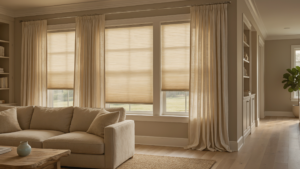
Cellular shades are particularly useful when insulation is a priority because of their honeycomb construction. Shutters and lined fabric treatments can also add another layer at the window.
For rooms where you want more softness, Roman shades or custom drapery may be worth considering.
This becomes especially appealing during fall and winter, when fabric can add both practical coverage and visual warmth.
Does Layering Window Treatments Improve Comfort?
Layering can be an excellent approach when one window needs to solve several problems.
For example, you might combine a functional shade with custom drapery panels.
The shade can handle everyday light control and privacy. Drapery can add another layer of fabric while making the room feel warmer and more finished.
Popular combinations include:
- Roman shades with drapery
- Roller shades with decorative panels
- Solar shades with drapery
- Blinds with drapery panels
Layering is particularly effective in bedrooms, living rooms, and formal dining areas where both comfort and design matter.
It also gives homeowners more flexibility.
On a mild fall afternoon, you might leave the drapes open and use the shade to manage glare. During a cold evening, you may prefer a more enclosed, layered window.
Do Motorized Shades Help With Energy Efficiency?
Motorization can make energy-conscious window management easier because shades can be adjusted more conveniently as conditions change.
The motor itself doesn’t make the fabric more insulating. The benefit is that it can make you more likely to use the window treatment when you need it.
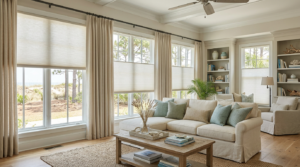
Consider a Virginia Beach great room with several tall windows.
Direct sun begins reaching the room in the afternoon. If every shade requires individual manual adjustment—especially on difficult-to-reach windows—you may simply leave them open.
Motorization can make controlling those windows much easier.
It can be especially useful for:
- Tall windows
- Large groups of windows
- Hard-to-reach locations
- Bedrooms
- Open-concept living spaces
- Frequently adjusted shades
Convenience matters when you’re trying to respond to sunlight throughout the day.
Find the Right Energy-Efficient Window Treatments for Your Home
Energy-efficient window treatments aren’t about making every window darker or covering the views that make coastal living special.
They’re about giving you better control.
The right combination of cellular shades, solar shades, plantation shutters, Roman shades, roller shades, or layered treatments can help manage sunlight, add insulation at the window, and make your Virginia Beach home feel more comfortable throughout the seasons.
Ready to explore the options in your own home? Request a free in-home consultation with Made in the Shade Virginia Beach. Julie will bring samples to you so you can compare materials, colors, light control, and design options at the windows where they’ll actually be installed.
Contact Made in the Shade Virginia Beach to schedule your free in-home consultation.
FAQs
Q: What type of window treatment is best for energy efficiency?
A: Cellular shades are one of the strongest options when window insulation is the main goal because their honeycomb construction creates insulating air pockets. Shutters, solar shades, Roman shades, and layered treatments can address other comfort and sunlight concerns.
Q: Do plantation shutters help insulate windows?
A: Plantation shutters add another substantial layer between the room and the glass when closed. They also allow homeowners to adjust the louvers to manage sunlight and privacy throughout the day.
Q: Are solar shades good for Virginia Beach coastal homes?
A: Solar shades can be particularly useful in coastal homes with large windows and strong sunlight. Depending on the fabric selected, they can reduce glare and solar heat gain while maintaining some outward visibility.
Q: Are motorized shades more energy efficient?
A: Motorization does not make the shade material itself more insulating, but it can make shades easier to adjust as sunlight and temperatures change. This is particularly useful for tall, large, or hard-to-reach windows.
Q: Can energy-efficient window treatments lower utility bills?
A: Window treatments can help manage solar heat gain and heat loss at windows, but actual utility savings depend on many factors, including the home’s windows, insulation, HVAC system, exposure, climate, and how the treatments are used.

