
If you live in Virginia Beach, you already know the weather here is unlike anywhere else in Virginia. Salt air rolls in off the Atlantic, summer humidity wraps around every surface, and the UV intensity through ocean- and bay-facing windows is genuinely intense. Choosing window blinds in Virginia Beach, VA is not the same as choosing blinds in Richmond or northern Virginia. The coastal environment changes the calculation entirely — and that is exactly what this guide covers.
Julie Boswell, owner of Made in the Shade Virginia Beach, has helped hundreds of Hampton Roads homeowners choose the right window treatments for their specific conditions. She lives here too — in the Red Mill area of Virginia Beach — and she understands firsthand what coastal homes demand from the products inside them.
Why Does Virginia Beach’s Coastal Climate Matter When Choosing Window Blinds?
Most people choose window blinds based on color, price, and style. In Virginia Beach, those factors matter — but material durability in a coastal environment deserves equal attention.
Salt air is corrosive. It accelerates the degradation of finishes, warps natural wood, and breaks down adhesive laminates over time. Hampton Roads humidity, particularly between May and September, creates conditions where real wood swells, contracts, and eventually warps. The UV intensity from direct ocean and Chesapeake Bay exposure bleaches and fades window treatments faster than in inland homes.
Additionally, Virginia Beach homes are typically built with large windows, sliding glass doors, and dedicated sunrooms or screened porches. These features give coastal homes their signature open, light-filled feel — however, they also mean more window area exposed to more UV and more salt air. Choosing the wrong material is a mistake you will notice within a season or two.
That is why Julie at Made in the Shade Virginia Beach starts every consultation with a conversation about the home’s orientation, the rooms facing water, and the humidity levels in each space. The right blind for a Shore Drive condo facing the Chesapeake is a very different conversation from the right blind for a Kempsville home.
What Are the Best Blinds for Coastal Virginia Beach Homes?
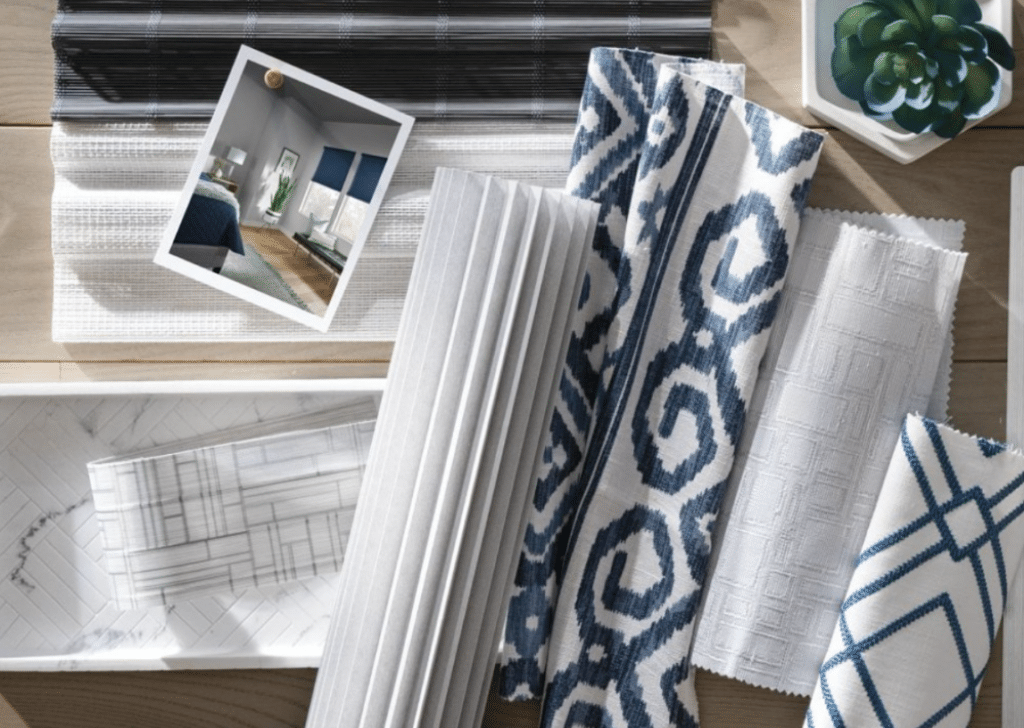
Several materials perform consistently well in Hampton Roads conditions. Here is how they stack up:
Faux wood blinds are the single best all-around choice for most coastal Virginia Beach homes. They look nearly identical to real wood at a fraction of the cost, and they handle salt air, humidity, and heat without warping, cracking, or discoloring. For most rooms in most Virginia Beach homes, faux wood blinds are the smart starting point.
Aluminum blinds are the most moisture-proof option available. They thrive in kitchens and bathrooms where humidity spikes constantly. They wipe clean easily and will never warp or corrode. Visual options are more limited than faux wood, but for utility rooms and kitchens, they are hard to beat.
Solar shades excel in rooms with strong direct sun — particularly ocean-facing or bay-facing windows. They filter UV light and manage glare without fully blocking the view, which matters greatly for homeowners who paid a premium for those water views.
Cellular shades (also called honeycomb shades) are a strong choice for energy efficiency. Virginia Beach summers are genuinely hot, and cellular shades trap air in their honeycomb cells, reducing heat transfer and keeping your home cooler. They work especially well in rooms with west-facing windows that absorb afternoon heat.
Should You Choose Faux Wood or Real Wood Blinds in a Virginia Beach Home?
This is one of the most common questions Julie hears at consultations across Virginia Beach, Norfolk, and Chesapeake. The short answer: in a coastal Virginia Beach home, faux wood blinds are the smarter long-term investment.
Real wood blinds are beautiful. They add warmth and texture to any room. However, natural wood responds to moisture by swelling and contracting — and Hampton Roads has some of the highest average humidity levels on the East Coast. Over time, real wood blinds in a coastal home warp, stick, and lose their ability to open and close smoothly.
By contrast, faux wood blinds are engineered to handle exactly these conditions. They resist moisture, hold their shape through humid summers, and do not react to salt air the way natural wood does. Beyond that, faux wood blinds are typically less expensive than real wood — so you get better performance at a better price. You can explore the full range at our faux wood blinds page: madeintheshadevb.com/faux-wood-blinds/
That said, if you have a climate-controlled interior room with no direct humidity exposure and you love the look of real wood, Julie can walk you through real wood options during your free consultation.
What Blinds Work Best for Ocean-Facing or Bay-Facing Rooms?
Rooms with direct water views present a specific challenge: you want light control and UV protection, but you do not want to lose the view you invested in. Solar shades solve this problem better than any other product.
Solar shades use an open-weave fabric that filters UV light and reduces glare without blocking the view from inside the room. A well-chosen solar shade lets you sit in a Sandbridge living room at noon without squinting — while still seeing the water clearly. The fabric openness percentage determines how much view you preserve versus how much heat and glare you block, and Julie can walk you through those tradeoffs during your consultation.
For bedroom windows with ocean or bay exposure, many Virginia Beach clients use a layered approach: a solar shade for daytime UV management paired with a blackout cellular shade for sleeping. Early morning light off the water in coastal Hampton Roads neighborhoods can be genuinely intense, and this combination handles both situations well.
What Are the Best Blinds for Sunrooms and Screened Porches in Virginia Beach?
Sunrooms and Florida rooms are a staple of Virginia Beach residential architecture — and they present their own material challenges. Temperature swings, humidity, UV intensity, and occasional moisture from screened openings mean whatever you choose needs to be tough.
For enclosed sunrooms, solar shades are the most popular choice among Made in the Shade Virginia Beach clients. They manage intense light without making the room feel closed in, and they preserve the bright, open quality that makes a sunroom worth having. Motorized solar shades are particularly popular in this space because they allow easy adjustment without reaching across furniture.
For screened porches and fully outdoor applications, exterior patio shades are the right product — not standard interior blinds. Exterior patio shades use UV-stable outdoor fabrics and moisture-resistant hardware designed for direct weather exposure. They transform a screened porch into a genuinely year-round outdoor living space. Find out more at madeintheshadevb.com/outdoor-shades/
How Do You Protect Furniture and Flooring From UV Damage in a Coastal Home?
UV damage is one of the least-discussed but most consistent costs of owning a coastal Virginia Beach home. The same light intensity that gives Hampton Roads its beautiful bright skies also fades hardwood floors, bleaches upholstery, and yellows fabrics — typically faster than in inland areas.
Solar shades are the most effective tool for UV protection while preserving natural light. They block a significant percentage of UV rays while still letting in diffused light — so the room stays bright but the fabrics and floors inside are protected.
Cellular shades with UV-blocking fabrics offer excellent protection in rooms where you want a fully opaque look when the shades are down. Julie can help you match the right UV-blocking percentage to the actual sun exposure each room receives during your free in-home consultation.
Frequently Asked Questions — Window Blinds in Virginia Beach, VA
Q: Are real wood blinds a bad idea in Virginia Beach? |
| Not categorically — but in coastal Virginia Beach homes, faux wood blinds are the smarter long-term investment for most rooms. Hampton Roads humidity causes natural wood to swell, contract, and eventually warp over time. Faux wood blinds are engineered to handle exactly these conditions: they resist moisture, hold their shape through humid summers, and stand up to salt air without the degradation real wood experiences. For a climate-controlled interior room with minimal moisture exposure, real wood may still work well — and Julie can help you decide during your free consultation at (757) 563-3372. |
Q: What blinds are best for a Virginia Beach home with an ocean or bay view? |
| Solar shades are the clear first choice for ocean- or bay-facing rooms in Virginia Beach. They use an open-weave fabric that blocks UV rays and reduces glare while preserving the view from inside the room. Without them, direct water-facing sun at midday makes rooms uncomfortable to use — and the UV exposure fades furniture and floors over time. Solar shades solve both problems without sacrificing the view you paid for. |
Q: Do you serve all areas of Virginia Beach, VA? |
| A: Yes — Made in the Shade Virginia Beach serves the full city of Virginia Beach and the broader Hampton Roads area. That includes Virginia Beach Oceanfront, Shore Drive, Sandbridge, Kempsville, Great Neck, Pungo, Red Mill, Chesapeake Beach, and surrounding neighborhoods, as well as Norfolk, Chesapeake, and Suffolk. Julie brings samples directly to your home — no matter which part of Virginia Beach you’re in. |
By Julie Boswell, Made in the Shade Virginia Beach — locally owned and operated, serving Virginia Beach and Hampton Roads
Ready to transform your windows?Request your free in-home consultation with Made in the Shade Virginia Beach — we’ll bring the showroom to you. ☎ Call (757)563-3372 | Request a Free Consultation |
Contact us or review us on Google!